vol01/10
connecting modern people to modern architecture
home

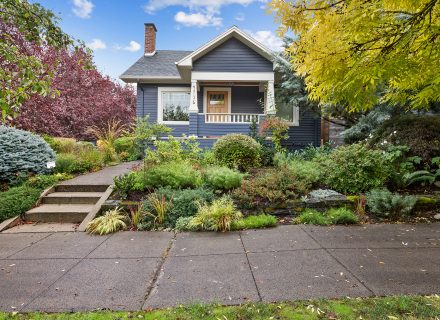
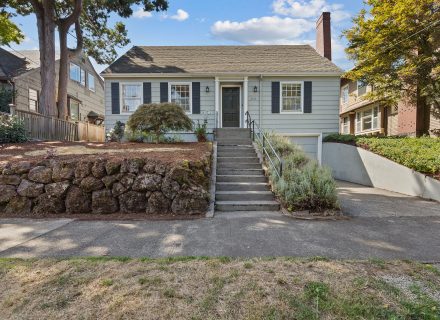
1937 Modern

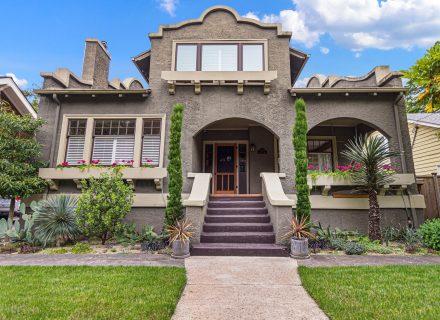
Extensively upgraded, this home is located just 1.2 miles from downtown Portland and is very close to OHSU. It offers exceptional convenience and amenities for those wanting to live virtually downtown and have the advantages of a single family house with a yard, all in move-in condition. A rare example of Arte Moderne in Portland, check it out on the for sale pages.


John Yeon

a brief biographical sketch

In preparing this "sketch" I relied heavily on an interview that Marian Kolisch conducted with John Yeon and which is part of the Oral History Interviews in the Archives of American Art, Smithsonian Institution. Other sources are referenced in parenthetical notes referring to "sources" list at the end of the piece. BZ

John Yeon was born in Portland in 1910 and was raised in the Mocks Crest area of north Portland. He became one of the regions most celebrated architects and intellects, achieving national and international recognition. His architectural work has an elegance and refinement that reflects an intense attention to detail and an emphasis on composition and proportion not only in form but in how one moves through space.

The list of Yeon's built work is not long. In 1937 he had his first built commission, the Watzek house. It is perhaps his best known work and was remarkable for the time and is remarkable still. It was included in both the 10th and the 15th anniversary exhibits at New York Museum of Modern Art (Gragg, web). The builder of the Watzek house, Burt Smith, was so impressed with Yeon's work that he had him design some small houses that he could build on speculation. They became known as the "plywood houses." Two were built in the southwest hills off of Barnes Rd and two were built in north Portland (interestingly in the Mocks Crest area). Around six more plywood houses of subtly different designs were built in Lake Oswego. Yeon also referred to the Jorgensen house as one of the plywood houses but it is on a larger scale and it was done on commission. There was another handful of private homes he did as commissions in addtition to the Watzek House (Jorgenson 1939, Vietor 1941, Van Buren, Shaw 1950, Swan 1950, Cottrell 1950, Corbett? ). He began the design of the Portland Visitors Center in 1947 (Ritz, Richard, Architects of Oregon, p.444) which is often referred to as his only commercial building, but he also did a small office building for a real estate firm. He did museum gallery installations in Kansas City, Portland and San Francisco.

Yeon never completed formal architectural studies. In his own words "I didn't graduate from anything. I didn't graduate from grammar school, from high school, or college. I did graduate from sunday school"(Kolisch Interview ). A lack of degrees does not equal a lack of instruction; he seems to have attended a number of fine schools on all levels around the country but simply accelerated out of them, moving on to the next level before completing the one he was in.

Responding to a question by Kolisch as to when he became interested in architecture, Yeon responded, "I don't know when it started. But when Mocks Crest was developed, of course, there were houses built and I watched very, very carefully. I seemed to know that's what I was interested in because I stopped going to the beach in summer at my own request and stayed in Portland and worked as an office boy in the Doyle office. And later [as] an office boy in [Brookman's] office. I didn't learn much architecture then because I always ended up either making models or doing renderings or fancy pictures."

"I went to college in 1929. I was only at Stanford one quarter and my father died. ...I came back at the time of his death and never went back to Stanford. Instead I went to New York and worked at an architect's office [Young, Moskowitz and Rosenbloom] by prearrangement from Portland, and went to Columbia at night. ...I lived in a little room up by Columbia. However, Columbia was excruciatingly boring. I had to take courses on, you know, how to put water tanks on top of buildings in New York and so on. And I'm afraid I misbehaved very badly. I kept the job but I kept dropping out of classes and New York became very glamorous at night. Instead of night school, I met fascinating people and that interrupted my formal education. [But] I was impatient, terribly impatient. I had all kinds of things I wanted to accomplish that more formal education wouldn't allow."

His interest in architecture was matched and perhaps eclipsed by his interest in landscape and nature conservancy. link to the rest of the article.....


Architects Who Draw...Or Paint...Or...

tracing paper sketch by Saul Zaik

There is something compelling about hand drawn architectural work. Tracing paper sketches, plans, diagrams, renderings of all kinds. They all keep the human presence up front in a way that computer generated work doesn't. Plus there is a "thingness" about them:  they become works on their own. They're nice to look at.

Lair Hill Condos sketch: Rick Potestio

With this in mind I thought it might be fun to feature architects and designers hand work. It can run the gamut from napkin sketches to meticulous renderings. Or it can be non project related: travel sketches, painting, drawings, whatever. I've started with some things I've already gathered, but what would make this idea really work would be to let it change and grow from submissions from those of you willing to share your work. If you are interested please give me a call (503 381-3115) or drop me an email (bob@portlandmodern.com).

...have a look at the first offering....

for sale in Garden Home

Designed by architect John Jensen in 1951, this house has been thoroughly updated and made into a real gem

Video on John Yeon

click on the image for interviews on Yeon
Check out Brian Libby's comments on the Portland design and planning community